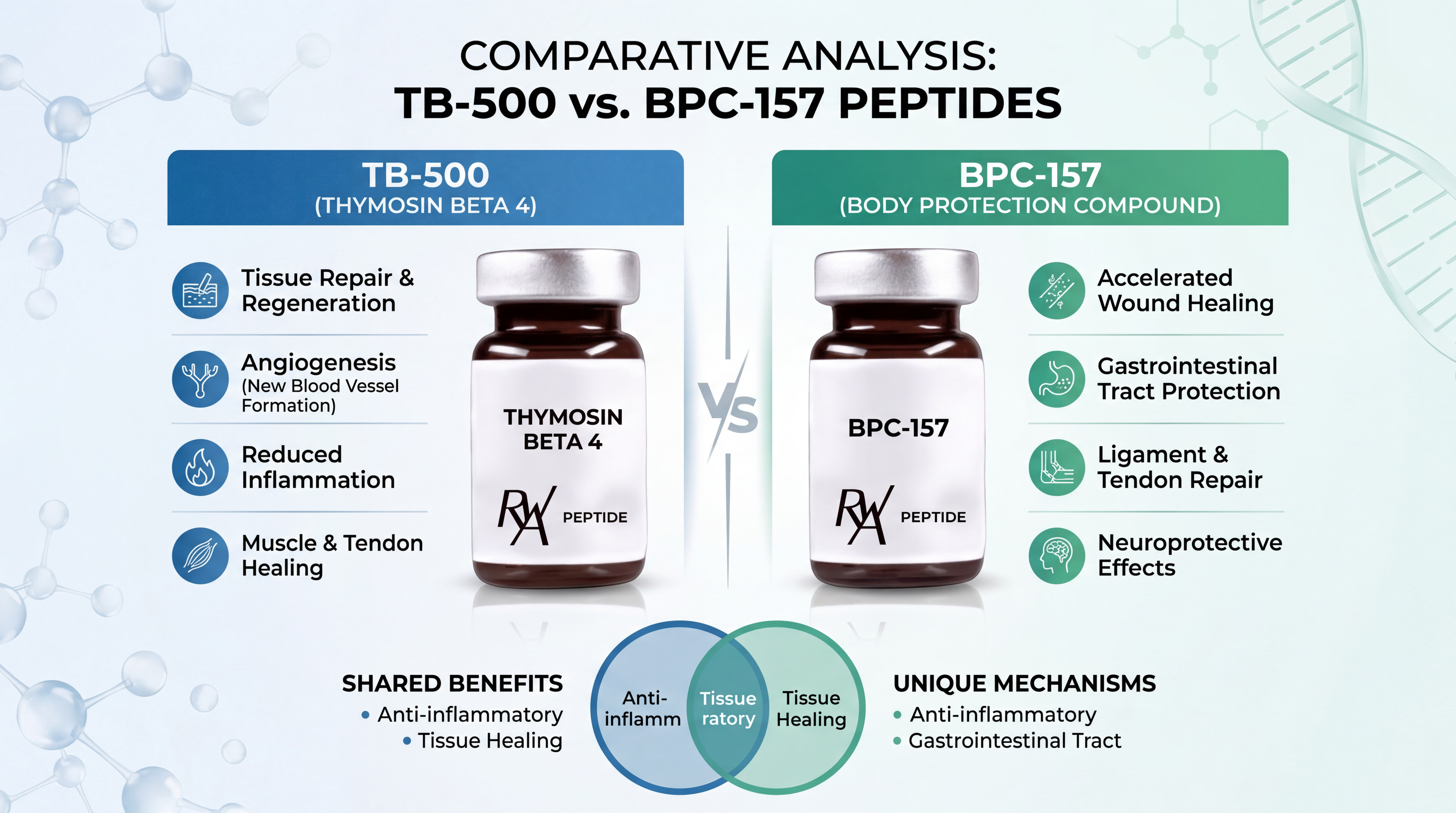
Standard Laboratory Reconstitution Protocol This formulation features a co-lyophilized cake containing both a highly stable pentadecapeptide (BPC-157) and a larger, more structurally sensitive 43-amino acid peptide (TB-500)
Tendon doesn't, not really
BPC-157 works at a cellular level to jumpstart recovery by increasing fibroblast migration, inducing F-actin formation, and enhancing vascular expression (VEGFR2) for healthy blood vessel modulation
When to modify or discontinue peptide therapy Continue indicators: Stable disease vs historical progression, measurable improvements in objective testing, good tolerability without significant side effects, financial sustainability, patient satisfaction with outcomes

Synthetic pentadecapeptide 15 amino acid sequence derived from human gastric juice protein Stable under a wide range of experimental conditions suitable for diverse laboratory protocols Referenced extensively in peer-reviewed literature on tissue repair and angiogenesis research Studied in the context of nitric oxide pathway modulation and VEGF signaling in preclinical models One of the most searched and purchased research peptides in laboratory supply Lyophilized format ensures stability and reproducibility across experimental runs Batch and lot identifiers on all labeling for full laboratory documentation compliance Research Background BPC-157 has been referenced extensively in scientific literature since the early work of Sikiric et al
Until recently, injection was considered to be the most efficient form of BPC-157 administration